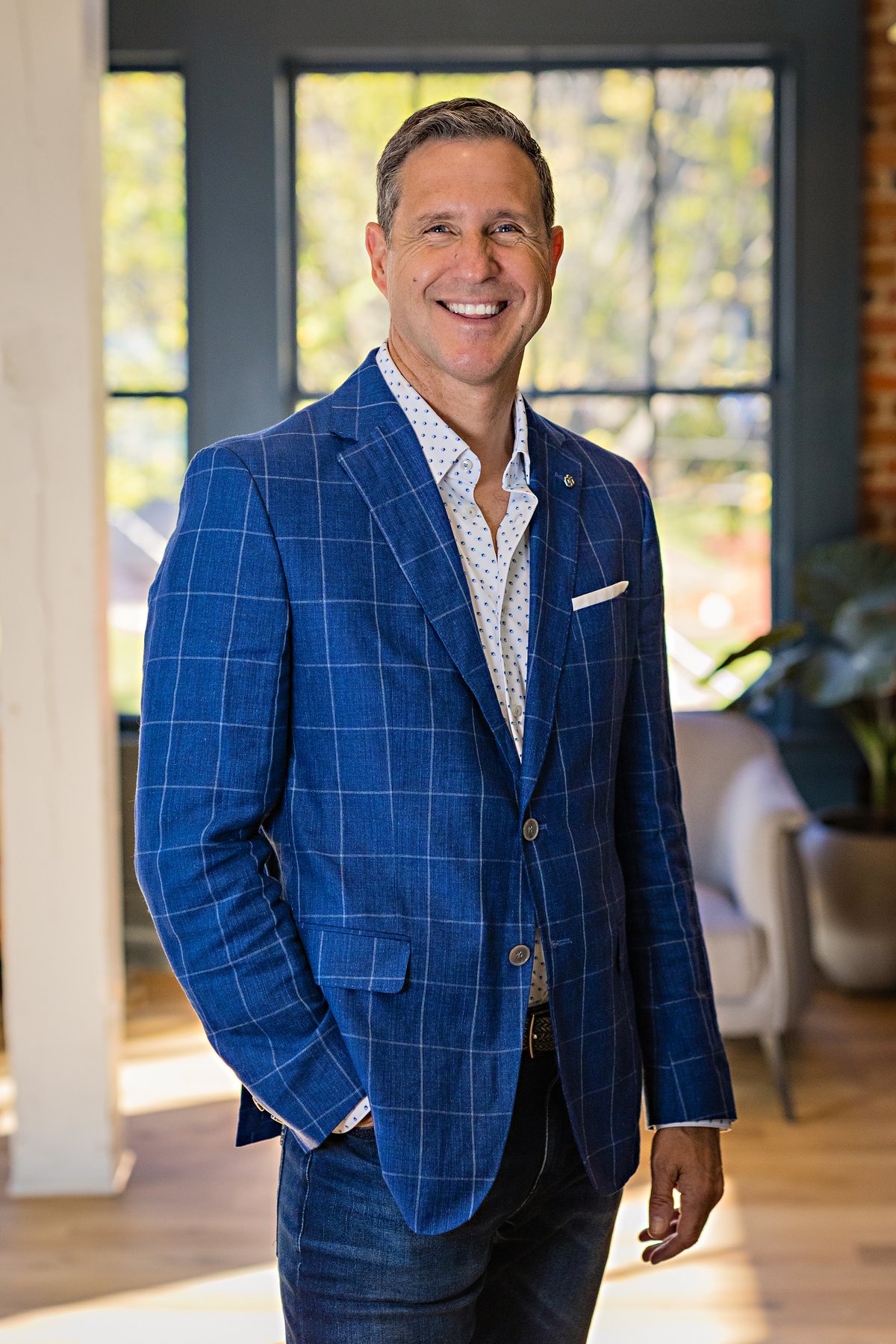
- 00:00 Rob
Rob:
When I have made a few mistakes in my career, when I look back and try to do an autopsy, invariably it's where I didn't listen to my gut.
- 00:29 Spencer
Spencer:
I have in my life stumbled on genius a few times and, uh, today is a lucky day because I got genius times two. And our guest today, Rob Shaw, was one of my roommates at West Point. We became very close friends. We saw the world very similarly, which is nice, but then Rob was always the guy to push me and I love that. I really love that about him. I'll just tell you this. Rob stood in our wedding as well, Aaron, and he had just bought a Camaro and he did all the- ... the logic on why the Camaro is better buy than the Corvette. and I watched him hammer that thing outside of our church to go get- his bow tie because he had his necktie only ... successfully turned it. Look, interrupted space time. he exploded out of the church parking lot and made it back. I went through a wormhole, Spencer. Listen, a guy you can count on, Aaron. A guy who wants to talk about the numbers, who's definitely gonna understand the numbers, is the guy you want as your banker. And, um- The guy you want as a friend too. Rob, thank you so much, man, for joining us. I'm gonna just turn it over to you for some open comments,
- 01:39 Rob
Rob:
Yeah. I appreciate that introduction, Spencer, and I just wanna say it's a privilege to be here. I really look forward to the conversation. you always tell people how smart I am, but something I've learned over the years is that intelligence is such a multifaceted, amorphous thing, and that we might have certain areas that we're smart, but I've learned over the years that I am dumb as a rock in a lot of areas too. And that's where it's good to surround yourself with different people that can balance you out, right? 'Cause what you're good at, other people could be bad at and vice versa, right? I look forward to this conversation and I appreciate that introduction, Spence.
- 02:14 Spencer
Spencer:
Yeah, absolutely, man. Jonathan Field, another guy Rob and I graduated with at West Point, have just started a new bank, Echelon Bank. stronger together. and we're gonna get there. But, I wanna start with this idea, Aaron, that you have embodied your whole life. You both are closet physicists. Rob, I know, was a physics major. Econ was his second choice up at West Point. Aaron has a similar start to his career, Rob. we could spend all day talking physics, but, what is true about most physicists, people that enjoy physics, is that you're empowered with the idea that there could be a grand unifying theory to know it all, and that it all connects. Yeah. And that, that right there, this gut feeling, me and Aaron have talked about the gut feeling before, the grand unifying theory. Yeah. Could we apply this to human nature? humans are a lot harder. It's a lot more challenging, I think. And even in our own lifetimes, we've learned a lot more about, our physical world, but how can you get things as simple as possible- so that you can be predictive in nature? And that's what Newton, you know, Aaron loves this analogy, Rob, Newton- Yeah ... ultimately did, was created an equation that could become predictive. And that's- Right ... kinda what we'd love to do with human nature, but I don't know if we'll ever get there.
- 03:28 Rob
Rob:
It's like the, it's like the, it's like the three-body problem, you know? If you've got two bodies, hey, the math works out great. But you throw in that third, a third body, all of a sudden chaos erupts, right? Yeah. And it's really difficult, and I think- Yeah, well- ... humans are infinitely more complicated than three bodies, so I don't know.
- 03:46 Aaron
Aaron:
That's part of the beauty of life though, right? I would say my favorite thing is that, what I've learned through, economics and statistics, like as you said, Spencer, humans are a lot more difficult to predict. There's so many other things going on. and you know, we've talked about how sometimes you can call this free will, you can call this chance. I don't think that the way our minds work is completely, preformed, you know? There's something else going on there. And What, what's fun about statistics and economics is that you learn to embrace that amount of, unpredictability. and I think the real trick and sort of what I think is unique about, how we approach this, is that you can harness some of that, unpredictability and still learn from it. it's not that because it's unpredictable there's nothing to be known. It's that if you actually incorporate some of that unpredictability, you can actually glean a lot of information or, ideas that are helpful to people. And so I think when we talk about ambiguity, You know, the three body problem is a new analogy for me, but I, I do think it's really apt. when you, uh, look at, like, quantum physics and stuff, and how the big aha moment was sort of, like, accepting that, a photon can be a wave and a particle at once, Like recognizing that once you accept that we don't actually know what's going on, but we can allow that, level of uncertainty into how we're thinking about it, there's still so much more to discover. I do feel that way about humans as well, is that once we allow- Yeah that level of unpredictability into the model of how we're thinking of humans, there's so much more to learn. and of course, I don't see us as, Isaac Newton or creating physics, but I think the analogy is helpful for people to understand that at least this is the approach that we're trying to push.
- 05:25 Rob
Rob:
Yeah. To me, it's like, it, it dovetails into the idea of randomness. You know, what is randomness? I remember, a quote I learned at West Point. It said that randomness is just a reflection of our lack of knowledge of the system, and I loved that idea initially 'cause it's like, well, then if you know the system more, then randomness starts to go away. And a good example would be like let's say you're sitting at a traffic light, and if we understand the pattern, it's green, and then it's yellow, then the light goes red, and first this intersection goes, then the cars from that intersection go. To us, it's not random. We know, hey, that- ... that red light just turned red. W- I, I'm about to get a green light. But like a, a, a mouse or some, like, animal with less information, to them it's just all chaos, right? "I have no idea what's happening," you know? But we understand it. But no matter what, there seems to be a physics, a baseline level of randomness that you can't get through, and that kinda goes into the Heisenberg uncertainty principle- Which is like the more knowledge you have of one part of the system, like maybe the position of the particle, then the less you know about its momentum. And you have to almost make trade-offs. Like, I really wanna know its momentum, then I have to sacrifice knowledge about where that particle is, or vice versa. And it seems, based on what I understand of science, that there's a baseline level of randomness that's just baked in, that no matter how much you know, you can't overcome. And that's where maybe you gotta just make those assumptions you're talking about, Aaron, to try to best model whatever decision you're trying to make. we're all ultimately individually, in the economic sense, trying to figure out the scarce inputs that are coming in, how to make use of those scarce inputs to create a shared outcome. Right ... it could be individually, but if you can understand the levers of the production function, that when that light goes yellow, I'm about to go green. Like, these are things that are controlling the flow. Right ... but it's understanding your own production function. And then Aaron would break it up even a little further in saying that, well, there's uncertainty, where if I'm rolling a six-sided die, I know it's a one in six chance that it's gonna be a three or whatever, you know? Yeah. but then there's also ambiguity. Okay ... ambiguity, at least Aaron, I'll, I'll lead in, is that I think, ambiguity is you don't understand your production function. Aaron, please take it further, and then we'll see if, it applies to what Rob's thinking about.
- 07:54 Aaron
Aaron:
So, so for me, ambiguity is unique because it's capturing the idea that, it's not so much you don't know where things are, but that, you can't tell the connection between what you're going to do and how it's going to influence the outcome. so fundamentally, it's different from uncertainty, where you know you can move the average outcome in one direction. But ambiguity, it's not clear how your actions lead to the outcome you're looking for
- 08:20 Spencer
Spencer:
In the physical world, I think we believe that ultimately it is knowable that there is no ambiguity, that we can understand every little piece of it. Mm-hmm. And fundamentally, I don't think human beings ever get there, because we are- Yeah ... so malleable. I don't know.
- 08:37 Rob
Rob:
If you think about our knowledge collectively as like a circle, and as that circle expands and the sphere or the, the circle grows, then so does the perimeter, which it represents effectively our, what we don't know. So as that circle expands, so does the perimeter of the circle, which is effectively the knowledge we're trying to grow into. So we, we know the more you know, the more you don't know- ... is kind of, the analogy, right? and it's very humbling. I mean, that's what physicists in the late, 19th century, they started to think arrogantly that they had it all figured out. it was all kind of like put a bow on it. And then quantum mechanics kicked in, and they're like, "Wait a second." "We're just getting started," right? so it's kind of a never-ending process of learning more and then realizing how much, there is still that we don't know and that maybe ties into that ambiguity that you're talking about.
- 09:29 Spencer
Spencer:
Yeah. we've come up with a framework and a playbook, that's basically how we see human beings. our audience should know that you were a finance officer, as you left West Point, which is wonderful. there was not many finance positions out there, so if you got finance, it meant you were really in the top of the class. been in the finance world for a long time. Yeah. And, as we're, talking principles, physics, physical world to the natural world or, from the natural world to the how human beings interact. you've been in banking, man, and I've taught money and banking a few times up at West Point. I, I love the course. Yeah ... it's given me so much insight. But a very simple sense for the audience just so they understand, like, heck, what does a bank do? To me, I'll just say this, and you can add on. Yeah. A bank creates a win-win in that it matches a borrower, who has a desire to buy something- Right that it may not have enough money, or they have other options for their money right now. they're gonna use some of your money, but your money that you have is coming from a saver, and that saver has extra money that they wanna put to get some return. So- Yeah ... in a bid ask spread where, we can create a win-win, the bank's biggest job is due diligence. Mm-hmm. And that may be a term that's foreign to people, but Aaron, to me- Banks set out to find due diligence are, um, eliciting truth. Mm-hmm. You're trying to find out where truth is, right? So that's my very simple look at it, Rob.
- 10:55 Rob
Rob:
Yeah. Yeah. I started my career back in '98, actually in a larger bank called AmSouth Bank. It doesn't exist anymore. It has been bought by another bank called Regions Bank, but some of our viewers may be familiar with that bank. And I was very fortunate, 'cause I didn't know a thing about banking. I had a very strong analytical, mathematical background, but it was a great program where I was able to rotate through different areas of the bank, work in their operations center, their retail branch area, the commercial banking. They had a trust department. So it was a really cool program, like from a 30,000-foot level, to understand all the different elements that, that comprise a bank. eventually, my career brought me to Tampa. I love the Tampa Bay market, and I gravitated towards the smaller banks. one of the things that I think makes the US economy very unique is that we do have such a robust industry of small, local, medium-sized banks. there's about 5,000 banks na- nationwide. The number has been coming down steadily over the last 40, 50 years. But if you go to other parts of the world, certainly in Canada, there's only like three or four big banks. Europe doesn't have nearly as many small banks. where I'm from originally, I was born in South Africa, they don't have a lot of banks. There's like, again, three or four large banks. So I think this industry of more small, local banks is something that makes the American economy pretty special. The reason I would argue that is because smaller banks are able to lean in a little bit more and take some more time to understand the business and what they do, what they need. And ultimately, they still need to do their due diligence and make sure that any loan that they're extending is properly mitigated, But I think we're able to do a better job of that. I just love, small community banking.
- 12:49 Spencer
Spencer:
Yeah. do you think a, a smaller bank then knows because of the local proximity, you just know your borrowers better and you know your savers better, so you have better information, so you can clear the market cleaner?
- 13:01 Rob
Rob:
Uh, yeah, absolutely. You know, they say there's five C's to credit. the only one that's a deal breaker is character. If there's a character flaw, an integrity issue with the borrower, then that's a hard no. But all the other ones, you know, there's cash flow, there's the conditions of the loan, the capacity to repay, um, those types of things, all the banks have the same information, but w-we can try to understand noise in those numbers better. You know, why did your cash flow dip last year? Oh, okay, it's because you had one large customer that deferred an order until this year. Yeah. So it, it made 2025 look bad, but '26 is bouncing back more strongly. And if we have that more full picture, and we're able to take the time to lean in and then meet with the customer and get some of that soft information, then we can still find a way to say yes. my team members will laugh at me when I say this, because I always use this analogy. The customer may be, may be asking for an apple, and maybe we can't give them the apple, but we can find a way to give them an orange. You know, we restructure the credit. maybe we reduce the loan amount, or we put in some initial collateral, or have another sponsor or a guarantor standing behind the loan. And we try to find a way to say yes when sometimes a, a larger bank may not have the, the time or the, the systems that enable them to underwrite the deal that way And I think that's critical for the US economy because banks, as you touched on, we play such a critical role. Um, the largest portion of the money supply in the, in the US economy is generated by banks. Mm-hmm. Because, you know, we have a fractional reserve banking system, and so the very same deposit that we're getting, if we're retaining, say, 10% as a reserve requirement, for every $1,000, we can make a $900, dollar loan off of that deposit, and then that deposit, that loan can then be redeposited at another bank, and the same process can play out again numerous times, which can rapidly expand the money supply. very large portion of the US money supply is generated by local banks through this process of savings and lending, right? I, I joke with the team. You know, we just started Echelon Bank. It's been my dream to build a local bank to serve the Tampa Bay market, and, I joke with the team. I tell them, "Guys, you don't realize this, but we're a manufacturing company. we're in the business of manufacturing loans to local, businesses and local relationships- And our raw material that we're taking in are the deposits that we're generating, right? and we use that raw material to then manufacture and underwrite and approve a loan. but taking deposits is a very serious business. we're a store of value. So, you know, the FDIC and our state regulators, they wanna make sure that we are doing our due diligence, and we're taking very seriously this responsibility of our customers giving us their hard-earned deposits, and we're making sure we're lending it out in prudent, and judicious, manners, so that we have a very low or a 0% default rate. or if there ever is a default, that the actual loss that the bank will, experience is effectively zero because we've got some backstops in the form of collateral or, or a personal guarantee. but hopefully you have no defaults, and if you do have any defaults, hopefully the loss is mitigated or completely eliminated through the structure of the underwriting. it's a really interesting business. I love it because I get to meet so many interesting people, so many local business owners. Many times it's a second or even a third generation, company. And as I get older, it's, it's kinda cool to see some of my customers, pass the business on to their next generation. it's a reminder to me I'm, I'm no spring chicken anymore. that's a very personally rewarding, situation. Or perhaps the business eventually sells, and there's an exit for the business owner. But then that's great too because then that, that business owner can be potentially a depositor of the bank. maybe they're no longer borrowing money because they've exited the business, but they've had a nice liquidity event and now they are a great depositor of the bank. 'Cause you need to build both sides of the bank's balance sheet at all times to maintain your liquidity position, and the loans. it's very, uh, rewarding business that I have, I've thoroughly enjoyed, to be part of for this past 27 years.
- 17:40 Spencer
Spencer:
Yeah. Yeah, the productivity, of a new idea that needs to be funded, ... as economics is largely after allocating things to the highest valued use, somebody out there may have a really wonderful idea, uh- Mm-hmm but don't really have the resources to fund this idea, you know? Right. and figuring out where the highest returning ideas and where our source of value, our s- scarce resource, call it a dollar bill, where that dollar bill should be allocated is gonna produce the greatest return. So- Right ... the many markets out there in the world, and I believe every decision is an allocation decision, you're allocating cash hopefully to its highest value use. Sure. That's what your savers are wanting to do,
- 18:18 Aaron
Aaron:
there's a couple things, but the first one was when you say, you've got the different Cs and you called it soft information. that's a term that I, I don't know that I've ever heard, there's some types of information that can only come from, either personal interaction or really fully understanding the actual context of one of your borrowers. I was thinking about when we first moved to New York and we were looking to buy a house, I remember, I could apply for my mortgage, with Chase online, I remember thinking that it was kind of weird that, you could qualify for this loan just through the internet, And when you, when you have these new businesses opening up,it's difficult for me to imagine a large bank really buying into an idea as much - Right ... as your local business would when they can get to know the person perhaps. And, so anyway, I love the idea of soft information Understand what people in your team need. there is this level of soft information of like what is the context of their life? I mean, you don't need to know their whole life story , but getting a broader picture of how do they interact with people, what upsets them or what motivates them- Right ... that's the soft information. I think that's the first thing I would take away from what you were saying, is that this soft information is crucial. And- you need to take the time to recognize it
- 19:25 Rob
Rob:
Yeah, the soft information informs what we call the, quote-unquote, the gut. a lot of times where there's a tweener, it's not a- ... a slam dunk or a layup, they always say, "Hey, kinda go with your gut." And what does that term really mean? It's a, it's this feeling you get. And I, I think it's sort of the sum total of all that soft information. Yeah, the numbers in black and white say this, the cashflow is, you know, with the debt service coverage ratio is X, the leverage is Y. Everybody can look at that objective data. But when you can really meet with a person, and that's where, like I wish so much the three of us were sitting around face to face, 'cause nothing ever fully replaces that in-person interaction. technology's amazing and this is the next best thing. But, but that face to face, there's something that happens with human beings when they're directly in, in front of each other. there's maybe some kinda, energy, interaction that creates a sense. And that's what I talk about, the, the soft information, kinda going with your gut. Is this person a person of integrity? do you kind of have a good feeling about, or is there something in the back of your mind saying, "Well, maybe this isn't a good fit." When I have made a few mistakes in my career, a couple loans I've done that I regret, when I look back and try to do an autopsy, invariably it's where I didn't listen to my gut. and that's probably what I've learned just through the 27 years of being a banker. but yeah, so- Yeah.
- 20:51 Spencer
Spencer:
and what's crazy about that, Aaron, is that this dude is a numbers guy, and you are a numbers guy. And both of you guys, you're talking about soft stuff.
- 21:00 Aaron
Aaron:
so I think a lot of this comes from, sort of a modern era that's very, interested in science. And I really do love how far we've gotten in science. But when it comes to people, the science is going to be helpful, but eventually we're gonna have to accept that there's, there's something else that we can pick up on that we're not gonna be able to quantify completely. and a good example of this is that , my wife, , has the most incredible BS detector. and I don't know how that's developed. I don't understand that part. What I do understand is that there's a lot of information that we absorb
- 21:34 Spencer
Spencer:
Like, for the audience out there, they probably don't get to talk to their bankers that much. I mean, maybe a local business guy, whatever, but I applied for a loan through Rob at a previous bank. I'm sure, Rob, you had a FICO score on me, and if the audience doesn't know, the Fair Isaac Corporation collects information to get hard data about who you are. And what what the conversation is right now is that there's a FICO score which defines you, right? And you may be a C-minus kind of dude in the classroom. You may be a C-minus kind of FICO scorer, but maybe I see your grit and your resilience and, like, all these other soft things that come about. Right. The reality is this. we're trying to elicit truth, that we're entering into some unec- unexpected future, right? We've talked about randomness. We've talked about the production function to get to that thing and the randomness in there. We talked about uncertainty. We talked about ambiguity, all those things. Mm-hmm. The FICO score and the hard data are trying to say, let's take the past stuff and apply it to this person, and whether or not we truly believe they can meet this expectation, right? Right. This person is worth investing in real dollars, right? Which is very easy to see. Mm-hmm. Like, it's very easy to see dollars. I can put an interest rate on a dollar. I can compound it. I can discount it for you. I can do whatever in the hell you want me to do with a dollar. Right. I mean, if you can make an Excel spreadsheet, you can do it, man. Yep. All you gotta do is understand it. It's one of the easiest currencies to deal with. But Aaron, what we're launching into here is an idea of, how do human beings exchange and what do we exchange in terms of our relationships and investing in each other, right? Mm-hmm. Yeah. Because Aaron's lovely wife, who is absolutely an all-star and has one of the best radars, into your character, and can pull it out very quickly, does this very well. She'd be a good banker for- Mm-hmm ... commitment that's out there. So- Yeah ... I kind of selfishly set up this pathway for us to talk about how the core economic principles can get to eliciting truth- Right and the allocation of not just your dollars, which banks do very well But also maybe your commitment or whatever we wanna call it. What are human beings allocating to get to these grand outcomes where it requires a team? what I wanna tell you, Aaron, is that I walked into Rob's headquarters, Jill and I did, And we walked out of... Aaron, we walked out of Rob's headquarters and we said, "Oh my God, the energy in that place is contagious." And you can feel it from the- Thank you ... people that are there. there is not a person there that's unhappy to be there, and their level of commitment to this team is, undeniable. And- Yeah ... I, I don't know, Rob, how did you build that? we move beyond the dollars. How are you building- Yeah ... that great team, that headquarters?
- 24:33 Rob
Rob:
Thanks for, thanks for saying that, Spencer. That, that's a huge passion of mine. It g- gets to the idea of culture. And, you know, going back to our West Point communication or our education, it's always the idea of s- of servant leadership, right? and the fact that you might be the lieutenant or the captain and the senior officer, but that just means you have to eat last. You know, you put your soldiers ahead of you. So that was something when I wanted to start, Echelon Bank, the local bank , Really to build that culture where, yeah, I might be the president and the CEO, that just means that I'm at the bottom. I'm, I'm working for everybody, right? And then assembling the board of directors, that represent all of our shareholders, that same culture, every member of the board that we chose, Jonathan Field, our other classmate, he's the board chair. And as we built out the rest of the board, it was critical that they bought into that idea of servant leadership and creating a bank that's really built around the bankers. I believe the employees must come first because as long as you've got good employees, experienced employees that are en- engaged and have ownership and feel vested and empowered, then that will generate the customer a- and then lead to a good customer experience that will in turn then lead to a high-performing, organization, or in this case, a bank, that'll have, financial success too. But it goes back to those ideas of first principles, right? Like, people say, "Oh, I wanna be happy." Oh, okay, well what does that mean? It's like staring at the sun, right? Just do that, you're gonna get blinded. But maybe if you start with these, these very foundational ideas first, and then you build upon them and you scaffold up from there, all of a sudden one day you're like, "You know what? Wow, I feel pretty happy." But you got to that by doing these other things first at a baseline. that means so much to me that you picked up on that, Spencer, because We put a lot of work into building this culture- and the key for me as we move forward is to protect it as we grow. You know, we're 32 employees right now. It's pretty easy to, stay on top of it and identify if it's not being, uh, lived when you're that small. But when you're 300, employees, it becomes a lot tougher, right? And I've seen organizations where they start to lose that. so that's something for me as a CEO to really focus on guarding and protecting and cultivating that culture, because we've got it right at the beginning, but let's make sure we keep it right throughout the process.
- 27:10 Spencer
Spencer:
You said you've put in a lot of hard work, but Aaron, I'm telling you, this is the same genuine guy I met in 1991. Like, what he's doing is who he is, not because he's working to do it. He, he makes that hard work look easy because he does genuinely care. Echelon's culture and core values. Integrity, empowerment, nimbleness, flat organizational structure, ownership and accountability, big picture thinking, teamwork, communication and transportation, and enjoy the ride. Like, you have to fit the place.
- 27:40 Aaron
Aaron:
the one thing that's really difficult about this is that, we talk about creating this kind of culture but it's hard to define. is it that they, have, a professional chef in the building who's gonna cook you food every day? what is it that actually makes people excited about what they're doing? it depends on where you're at, the people you're working with, and who you hire, right? we've talked about, um, the importance of selecting the right kinds of people for your team. But in the end, it always has to come back down to what is it that people are pursuing in their life , and whether or not there's a way to align that with objectives of your team And the problem is that's gonna be different in every context. Here we're talking about the importance of developing a team that feels motivated and interested in being there and feels, strongly about what they're doing. And then I think about, there are other personalities, like large CEOs. like, Elon Musk is sort of a different approach. Mm-hmm. And, and I think it has a lot to do- Yeah ... with the kind of industry that he's, in, where- Yeah. Mm ... he doesn't do banking, and there's probably a good reason for that. just like it depends on the industry that you're in and the approach- Yeah ... that you take. I think that that's one of the other things that I love about, focusing on the first principles of remembering that your context is different, the kinds of people that you're trying to recruit, and your own approach. you know, Elon Musk has gotta find people who are gonna be cool with his approach. my sense is that I probably wouldn't enjoy that very much, and that's fine. Yeah. Um, so, so I, I, that, that's, that's one of the biggest things that I'm taking from this, is that, one, developing that kind of a culture takes a bit more intimate knowledge of the kinds of things people on your team are pursuing, and then two, making sure that, uh, the kind of culture you're creating and your approach matches, the goals you're trying to achieve, and they're gonna be different.
- 29:22 Rob
Rob:
Yeah. Yeah. That's true. I mean, e- every organization has a different culture. I think in local community banking, w- we've hired very experienced bankers that have a tenure, probably average tenure of a- almost 20 years. And so you wanna empower them, let them have a sense of ownership, buy stock in the bank, have stock options, and just make them feel like they're empowered, and they're able to advocate. 'Cause when you're sitting across from a customer, a customer doesn't wanna deal with somebody who's just an order taker and has no authority, and they can pick up on that. If they're talking to somebody who's empowered, who's a decision-maker, that- they're gonna realize that. And then, a competitor comes in and there's somebody who's green and really has no authority, they're gonna have a lot harder time, earning the business, versus the local bank that can send out the chief credit officer and a very experienced relationship manager who can pretty much tell the customer right there on the spot, "Hey, listen, this makes sense. We can, we can knock this out. you're effectively approved." You know, that, that goes a long way. sometimes I tell people what we're really selling is access to decision-makers, that's something that the, the larger banks have a harder time doing it because of just their scale- Yeah and their process. Uh-huh. Uh, they might have credit, credit officers that in some cases aren't even in the local market. they're making decisions about a loan, and they're in ano- another state in some cases, right? Mm-hmm. it's a different process. So that's what I love about community banking.
- 30:56 Spencer
Spencer:
Yeah. and when you say that, Rob, we would tell you it's in our playbook. it's a core economic principle is, like, overcoming the principal-agent problem. Yeah. The principal being the president CEO, the agent acting on your behalf at the user level where the information is best. Do you have trust to give authority but then also hold them responsible, which comes with authority- Right ... you know? So- Right ... developing that trust sometimes comes with overcoming some failures, right? So like you said, you had a few failed, decisions and the ones that, you know, violated- Yeah your gut. Right ... you may not have had it yet, but how do you sense treating failure in the organization when one of those frontline folks do that. You may not have had it yet- Yeah ... but how do you adjust that?
- 31:43 Rob
Rob:
Yeah. I mean, one of our core principles that you read was ownership and accountability. Yeah. so I think, that expression, you sort of need to eat your frogs in the morning. You know, if there is a problem, let's get it on the table and let's deal with it right away. I mean, time is not your friend when there's an issue. and I think that just having transparency and potentially making a, a tough choice as early in the process as you can, is key. obviously we're just getting started. We haven't had to, you know, deal with any, e- error in any decision yet. Yeah. and I think, you know, that's where you also, as you make these decisions, you have to know what is plan B on the front end, 'cause once you make the loan to a customer, you're effectively kind of, you're in bed with them. Now you're in the deal. The money's out the door. Obviously you have to get that money back, the principal back plus the interest. you need to at that point recognize that if there's issues, you're gonna have to work with that borrower, right? and hopefully that's where you've got a partner that, a borrower that you've got a relationship with who's gonna communicate with you if things go sideways, and not... The worst thing a borrower can do is stop talking to their bank when there's an issue, all that does is just everyone then puckers up, and you get lawyers involved, and then, you know, potential solutions that are on the table get eliminated. Um- Yeah ... so, that's a k- a key part of, is having that relationship. but I think it comes down to time, addressing it right away, being upfront, and just, making some tough decisions early on in the process to eliminate, minimize the downside. Yeah. Mm.
- 33:21 Spencer
Spencer:
Is that a common term in banking, eat your frogs in the morning, or is that yours?
- 33:26 Rob
Rob:
I stole that from one of my, uh, longtime mentors, a g- a great banker named David Feaster at, at Signature Bank. He used to tell me that, and I, it stuck with me all the time. So I have to give him, him props on that.
- 33:39 Spencer
Spencer:
I love it, man. And I also love the idea, we've talked about this so much, is that when you start to have, friction, What's better than the black space, the black hole of the dark room where our imaginations go wild, is to communicate and create better information. That is critical for all parties, as the incentives don't align or they look like they're starting to separate from aligning in the cardinal direction we were all going. 'cause your mission statement and your core proposition talk about all the stakeholders. There's a saver on the other side of that, and the credibility of the bank is at question. Mm-hmm ... if you have too many defaults, it'll stop their whole ability to, pull in capital to be put out there in the community to be productive. Yeah. Right. Um, so you're really maintaining, in that stakeholder agreement, you're creating win-wins, and it's your job... This is, Aaron, this is why I thought it mattered so much that what banks do is due diligence. Banks elicit truth. Dollars are a very easy way to look at, the relative prices with that currency. I'm gonna jump one more step, 'cause we're kinda talking around it, I've told you, I think, Rob, I believe in this currency of commitment in our personal relationships. Yeah. That we can commit to each other, and we can allocate commitment to each other. And I would say your team, just like you understand a good FICO score from a good borrower- Mm-hmm ... and your gut would tell you, I hope I have a good FICO score in terms of commitment with you. You know what I mean? Yeah. Like, if we were measuring, the Fair Isaac Corporation could measure my commitment as an individual, and I was, um, had to maintain my own credibility of my own currency. The friendships I have in the world, I hope they think I have a high FICO. You know what I mean?
- 35:27 Rob
Rob:
Yeah. So- You got a, you got a 850 y- in my books, Spence. You got a 850. All right.
- 35:35 Aaron
Aaron:
the only other thing I wanted to add here was just that, what's incredible is what happens when that currency of commitment goes bankrupt. Yes. You know? So you think about when people default in a banking setting. Yeah. I actually think that the analogy is very apt when you look at people, when they'd built up this level of trust and this commitment, and then one of them does something, that completely bankrupts it. And what's interesting is, is thinking about how does that get built up again, and how committed are people to actually trying to make that relationship work. I don't think it's too far off from this analogy where, it's difficult for a bank to trust, a client after they've gone through this issue, And then when we talk about people locking up and not talking to each other, and just the monsters you build in your mind, uh, the stories you tell that- are completely fabricated. You start intuiting motives that aren't actually there. you don't know what they're doing or saying or even thinking. You're creating monsters And it becomes impossible for that relationship to rebuild. if it goes dark. It's like Chainsaw Massacre if people aren't talking to each other. And it sounds like that's true in the banking world, too, is that if people just start Disappearing from each other, that relationship is stuck. The friction's so high that it just stops completely.
- 36:45 Spencer
Spencer:
what's true in the Fair Isaac Corporation is you've got TransUnion, Experian, and Equifax collecting information at all times. And the banking industry is set up, and the credit industry is set up to facilitate this growth in our fractional banking system and give good information, baseline information. but I would also tell you that I believe the currency of commitment, at least in the profession that I came through in the Army, we have a FICO score. People know your reputation. Yeah. And your reputation's gonna travel with you in whatever profession you're in and whatever friend groups you are in. So there's not an official, FICO score for your currency of commitment, but, the world's watching. Yeah. Aaron's wife's watching.my wife's watching. You're watch- we're all watching. So- Yeah ... ultimately, this is the power of information, and- Mm-hmm ... it sets the expectations of our next investment of commitment- Yeah to each other. Yeah.
- 37:38 Rob
Rob:
There's, there's so many risks. We're all trying to ma- manage risk. one of them gets into, like, reputational risk, right? Yeah. If you don't handle a situation the right way, you know, over time, I'm sorry, but you're gonna start to have some reputational damage. Mm-hmm. And eventually it'll get to a point where maybe certain opportunities are closed off to you because of your past behaviors, right? Mm-hmm. in fact, I would always argue if I've seen a customer or a, a borrower, you know, they went through a tough patch, but they really stepped up and communicated and, and helped work with the bank and get through it in the best way possible- That to me is almost better than a customer that never, ever had a problem and always walked on roses and everything happened exactly according to plan. Because now you've seen how they handle a situation under duress. Yes. And it gives you a really good comfort if they've gotten through it, they worked, and now you do another deal with them, you have a, you have actual evidence that if things do go sideways, they're gonna step up and work with you again, right? Yes. So, one of our, uh, board members, a phenomenal banker, named Greg Olivier, who's got decades of credit risk management experience, he's made that point to me several times about, you know, if you've got that history where you saw someone work through a tough time, that goes a long way. Yes. That creates a, a ton of goodwill and, and currency. the other thing I wanna touch on is, that's one of the things I love about Echelon Bank, we're a local community bank, and we're really first and foremost a commercial business bank. Because in banking, the consumer world, which is very important and a wonderful area of banking, but it's become so commoditized to the level where it's almost everything is gotta fit exactly in a box and be a formula, and there's very little room for, subjectivity and the, what I describe as the craft of banking. where that's going back to that trusting your gut and looking at ways to customize and build a unique solution for that unique borrower. And that's what I love about banking small to medium-sized businesses, because every one of these businesses, they have different, uh, like, like a SWOT analysis. They got different strengths and opportunities, weaknesses and threats, and their unique business is special. And if you can lean into that and understand what makes them tick, what are their challenges, you can then not be so much of a commodity, and you can find ways to, to customize a solution and apply what I call consultative selling, right? Mm-hmm. Where you're bringing value to bear and making a solution that works for them that's not just a cookie cutter product. Consumer lend, like residential, mortgages, it's all just FICO score and here's- Yeah ... the product. and that's okay because the volumes are so huge in that space. I understand why that's, that part of the industry's gone that way. But that's what I love about business, banking businesses, is because it's still sort of the last frontier that, that is unique and it's resistant to sort of, AI and just, making everything just purely numbers, right? Yeah. Yeah.
- 40:45 Spencer
Spencer:
No, I totally agree. And that's, the space that I think we're trying, this leadership economics kind of idea, is that, um- Mm-hmm it is more than econometrics. Right. It is more than just transactional. These are the things that are, I don't know, these are the things that artificial intelligence won't do. I mean, the majority of our growth in this country, is the strength of the small businesses and all out there. We need to maintain that because of this, is that- Right the competitive nature of a free market economy, provides more strength. Yeah. It provides more strength. I mean, you say Echelon Bank, stronger together. Yeah. and that, that's the last big idea. I was thinking, like, the competitive nature of a free market in allocating these dollars to their most productive use- Right versus a purely cooperative where you do have failure and we're gonna need to cooperate as well, information and covering up that black space is really, the bridge that kinda makes it competitive and cooperative. You're gonna have a bad day. Right. We're all broken timber, man. You're- Right. I'm gonna need you- to pick me up. Yeah. I'm flying chalk three off of, that lead goose, and I'm gonna ultimately end up being the lead goose at some point. The echelon- Right. Yeah ... of the geese in nature, they fly that way 'cause it makes freaking sense. That's right. That's right. You watch the Tour de France with their working together, there's a team of cyclists that are supporting- Yeah one winner, but that team is supporting the group around them. And competitively- Right ... iron sharpens iron. They make each other stronger, but they absolutely need each other. And in our- Right ... society today, we've gotta figure out, that equilibrium. The c- competitive nature and the cooperative nature have to find an equilibrium, Yeah.
- 42:29 Rob
Rob:
So- And I think cooperation is, is our, as human beings, cooperation is our superpower. Yes. You know, if you go back to, you know, when we were on the plains of Africa, we were the weakest species out there, right? Mm-hmm. But the ability to use our brains and figure out ways to cooperate, all of a sudden now no one's gonna mess with, with 10 folks with sharp sticks, right? and that's what... That word echelon, and I'm sorry to keep plugging the bank, but it's just- No ... it's just my world right now. It goes, it's a cycling term. I love the sport of cycling, and when the crosswinds blow, that's how the team wants to ride, in a diagonal staggered formation where everybody's sheltered behind the lead rider. And at those sorts of speeds, they're saving 30, 40% of their energy. But that lead rider can only do it for so long. Eventually they're gonna go back and rest on the wheels of their teammates, right? Yes. And, that's the exact same reason why birds fly in a double echelon formation. Not to look pretty, but there's real world economic savings. I mean, they got precious resources. Every calorie in nature, every ounce of energy is scarce and precious. If you can save 30%, that could be the difference between, in some cases, living and dying, right? Yes. Yes. we're not in a life or death situation here at the bank, but it's the same principle, right? Um- Yes ... and this team I've, we've built is just phenomenal. And, uh, there's things I do well, and there's things that I don't do as well, but they, they'll cover me down when I get tired. and that's, uh, that's the teamwork.guess that comes from our, the military background, Spencer. That's a- Well- ... was something that was im- impressed upon us when we were just kids ...
- 44:05 Spencer
Spencer:
I think the military uses it because it works. Yeah. The geese use it because it freaking works. Right. Economics principles, they work. We're not creating anything that's different- Right than has been taught for centuries. Right. But what we are saying is that, listen, you're doing it right now. You may say you're plugging the bank. You're not plugging the bank. You're being Rob Shaw. That's the same Rob Shaw, Aaron, that I met, in 1991. He cares about all of us, right? But he's gonna push us on every run. And when he needs to be the lead dog, he may even take the lead dog position for- You know, 10 minutes more than you would've expected, right? Mm-hmm. Yeah. And then it's gonna be that shared commitment is gonna make me wanna take it a little more. And then ultimately- Yeah ... teams are required to do great things. I believe that. We need each other. And, um- Yeah ... I think, I think it becomes most apparent when the adversity's strongest. Yeah. And I think that where there is risk, where the innovation in the world happens is where- Yeah ... it's risky, and we don't know what the expected outcome is. Right. It could go bad. But guess what we have? An insurance plan that we call teammates. And that- Yeah ... is, that's all we're selling, man, in Leadership Econ, Aaron.
- 45:22 Rob
Rob:
The only, the only other expression, yeah, I'm sure you've heard this expression, like if you wanna go fast, go alone. if you wanna go far, go together. You know? Mm-hmm. Because by yourself, yeah, you might go fast in the beginning. Decisions are easy. You can make all the decisions. No one's slowing you down. But eventually you're gonna get... 'Cause you have blind spots, you're gonna get burned, right? Yep. And that's the idea. If you wanna go far and build something that's sustainable, go together. Take a team. Build a team, because you are truly stronger together, at its essence, that's exactly what we're trying to do here.
- 45:56 Aaron
Aaron:
I'm looking at some of the decisions I've made, professionally and, when it comes to publishing papers or something like that, there are some projects that if you're doing it on your own and it takes eight years for it to be done, that's a very painful long eight years. Whereas if you've- Yeah ... got an eight-year project that you're doing with five other people who are excellent teammates, it's not the same burden. there are some ideas here that have stuck with me and, I wanted to give you, Rob, a chance to talk about this. the biggest one is that a bank has two sides. a lot of times when people borrow from banks, they, especially large banks, they feel like they're just these, corporate profit machines that are out there to get them and take advantage of them. but I think a local bank helps you see that it is a two-sided thing, where there are savers that have put money into your bank that you are responsible Sure. And we've seen, you know, what happens when banks aren't very responsible with that money. And it's, it's damaging. Um- Right ... so there are two things here. The first is, how do you convince people that you're the place to put their money? how do you convince them that you're going to not just take care of their money. I mean, r- we have so much insurance- Right ... right now on- Sure ... on bank deposits. And so it's difficult in my mind to think about what it is that you're gonna tell people that, "Yeah, put your money here as opposed to some giant other bank." and then the other- part is what happens when something does go wrong on the borrower's side how do you discern whether or not there's a level of forgiveness there that's appropriate, while maintaining the, integrity for your, savers, so that- Right ... balance between I, I need to convince people to invest in this- Yeah ... so that, right, and then on the other hand, when people on this borrowing side fall through, how do you manage that? and the people who are putting money in the bank, they are trusting you to, to manage that correctly. And so- Sure ... I actually do find this analogy quite, Yeah ... interesting.
- 47:42 Rob
Rob:
Yeah, and many customers, hopefully the customers are both sides. they're a borrowing customer and a depositing customer, right? Most of our best customers, we always want a loan relationship to also bank with us and have their deposits with us. So they're vested on both sides, of course. I think I'll tackle the first part of that question first. You know, convincing people to, to bank with us. I think there, there's definitely a little bit of a, return to the idea of local, of supporting the local economy. and I think a lot of people, all things being equal, they would rather work with a small local business that's part of the region. You know, we, we serve the Tampa Bay MSA. it's the 17th largest, region in the country. And people, all things being equal, they know that they bank with us, the loans we then use that money to make are gonna go right back into the local economy and create that positive feedback loop. Some of the larger national regional or international banks, they may have deposits in one area, and they may never lend back in that area. They might lend overseas or in a completely different part of the country, right? So it's almost like they're taking the deposits of Tampa Bay and lending them on the West Coast, for example, right? So I think a lot of people understand that and wanna work with a, a local bank. And then we've just got amazing great bankers who have relationships with customers that know their experience and feel very confident that we're going to prudently deploy those deposits in good earning, and loan investments that are gonna generate healthy returns and not have a default. we do obviously take a provision for loan losses, 'cause you never know which loan's gonna go bad. But statistically, if there's a non-zero probability, given enough volume and enough time, you will have a problem. That's inevitable. That's just math, right? So we always build in a reserve so that if there is a default, we've pre-allocated that and built it into our business plan so we can absorb that hit, if you will. it's my goal to never a- actually take a hit, but we know that the math doesn't work that way long term, so we do allocate for that. you know, but it goes back to banking people we know a- and having a fallback really, and just having decades of experience. and learning from the times you have made mistakes in the past. but it is a very interesting, balance there that you raise, Aaron, that, always in the back of my mind, as we build a bank.
- 50:07 Aaron
Aaron:
it's al- it's almost like the people that are putting money into the bank they're trusting that this is, valuable for their community, right? Like, so- Right ... if people had no sense of actually wanting to invest in the community that they're building, it's not clear to me that you would have as strong of an appeal. I think- Right ... the, especially the older you get and the longer you've been in a place and the more you understand where you are, you do become more invested in it.
- 50:29 Rob
Rob:
we have to be right 99.99% of the time because as a business our gross profit margin, 'cause we're buying and selling money, a- and we're lucky if we have a 3.5% net interest margin. Well, that net interest margin, effectively that's a bank's gross profit. Now, most businesses have a much higher gross profit margin, after their cost of goods sold than 3.5%, so that's a very thin gross profit margin. That's why we've gotta be right 99.9% of the time because you can't make a lot of mistakes when your gross profit margin's 3.5%. so it's a very serious business, but, we've got a amazing team and, we've been doing it a long time, and just knowing the customers I think can help us a lot to make sure we always make g- uh, good decisions and are a good steward with the deposits with, which we're entrusted from our, uh, depositors.
- 51:22 Aaron
Aaron:
you can just hear it coming off you here where you're really, invested in the idea here. banking sounds like a very stressful profession to me. but people are really motivated, as Spencer said, where you are because it's more than just trying to, create larger, profits just for you. there's something else- Right ... that's also part of this. I know we gotta wrap up here, so- the one question that I always like to ask people, is just if you could tell folks one thing to just start with tomorrow, in order to either improve their lives or improve their leadership. I know we've spent a lot of this time talking about banking and seeing it as an analogy but, you have a lot of experience. You've clearly built good teams. so what's one thing that you would tell people that you could start with tomorrow that would actually sh- put them on the right path towards, living a better life or being a better leader?
- 52:10 Rob
Rob:
that's a really tough question. I, I, for, for me, I would say- I should have braced you for that. I should No, it's you know, just have that self-belief. I look back at my career, I'm finally doing this, but I almost feel like I maybe waited too long. You know, maybe we- that, that recognition that, you know, the most precious resource that we do have is time. when you maintain that and keep that thought in the back of your mind, I think that'll, in the long run, you know, shape your career better and your life in general because you won't take things for granted and you won't waste, waste time, if there's an idea someone's thinking about or a goal or a passion they have, just remember it's later than you think it is. I would encourage people to just to pursue that dream, right? don't put it off. There's always an excuse to wait till tomorrow and put it off, but, uh, sometimes we have less days than we realize. for me, I think looking back at it was a lot of encouragement from really great friends, like we talked about our board chairman, Jonathan Field, many other members of our board, friends of mine, that really, encouraged me eventually to make this jump. And having now finally done it, I, "Oh, I wish I... Why didn't I do it sooner?" You know? but you can't change the past, but that to me is a great lesson that, I try to remember, and I would pass that along to everybody
- 53:25 Spencer
Spencer:
Awesome. I'm telling you, Aaron, I was watching, Major Steven Reich, who was killed in, combat in the Lone Survivor event from the Night Stalkers. He's one of my good friends, was a pitcher at West Point. And, his story's... I think Fox Sports did it. It's A Soldier's Story about Major Steven Reich. And the last words that Steve says in that video, and it's talking about him as a pitcher, and they have video of him before, the Lone Survivor event happened obviously. And, he said, "You know, I'm just kind of scared to not take advantage of every opportunity that's in front of me." And when he said that, I'm looking at my old friend, God rest his soul, what a great American, a great friend. Scared hit me, and I thought scarcity. Exactly what Rob just said, is that scarcity is the great motivator, and you gotta believe in yourself. I'm gonna tell you this, as I pull out of this conversation, people put money in Rob's bank, dollars are put in there, and we allocate them to their highest valued use. When he just said it took his friends to kind of motivate him to go ahead and start this thing, and there was less time on the clock, Rob, than you thought. Mm-hmm. It's almost like our shared commitment is in our friends. Your friends and the team you have created around you, that's your bank of commitment. Yeah. And we, Rob and I, a- and Aaron I would consider in this group as well, we've been blessed with really great friends in our lives that are really committed to us. So we're sitting on a really healthy bank, with high commitment of currency FICO scores, I can tell you that much. I love it. I love it. Yeah. And if I were gonna wrap all this together, the same mechanisms that are at play in Rob's conundrum of taking savers and allocating things to their highest valued use- Are in our audience's conundrum as well. It is your challenge to, uh, align yourself with the right commitment, and then commit to the right things, and then be stronger together, like Echelon Bank, Rob. Thank you so much, Rob. Yeah. Yeah. You're very welcome, Aaron. Pleasure. And Spencer, I always, I, I love it so much. Thanks for letting me do this, guys.